
Fire destroyed the Saint-Jean-de-Dieu asylum on 6 May 1890. Nine days later, its director, Cléophée Têtu, known as Sister Thérèse de Jésus, was drawing plans for pavilions where the patients could be housed again.
Building at Longue-Pointe
The institution began with an agreement. On 4 October 1873, Sister Thérèse represented the Sisters of Providence in signing a deed with Quebec premier Gédéon Ouimet to establish an asylum at Longue-Pointe. She brought administrative experience to the project, having managed institutions outside Quebec and served as her community’s general treasurer from 1866 to 1875.
Before the building went up, she toured hospitals in Ontario and the United States with another sister and architect Benjamin Lamontagne. Their chosen plan drew on the Mount Hope Retreat in Baltimore. Construction began in April 1874, and the transfer of the first patients started on 20 July 1875. The hospital brought services that had been scattered among different premises into a single establishment, with Sister Thérèse directing its daily operation.
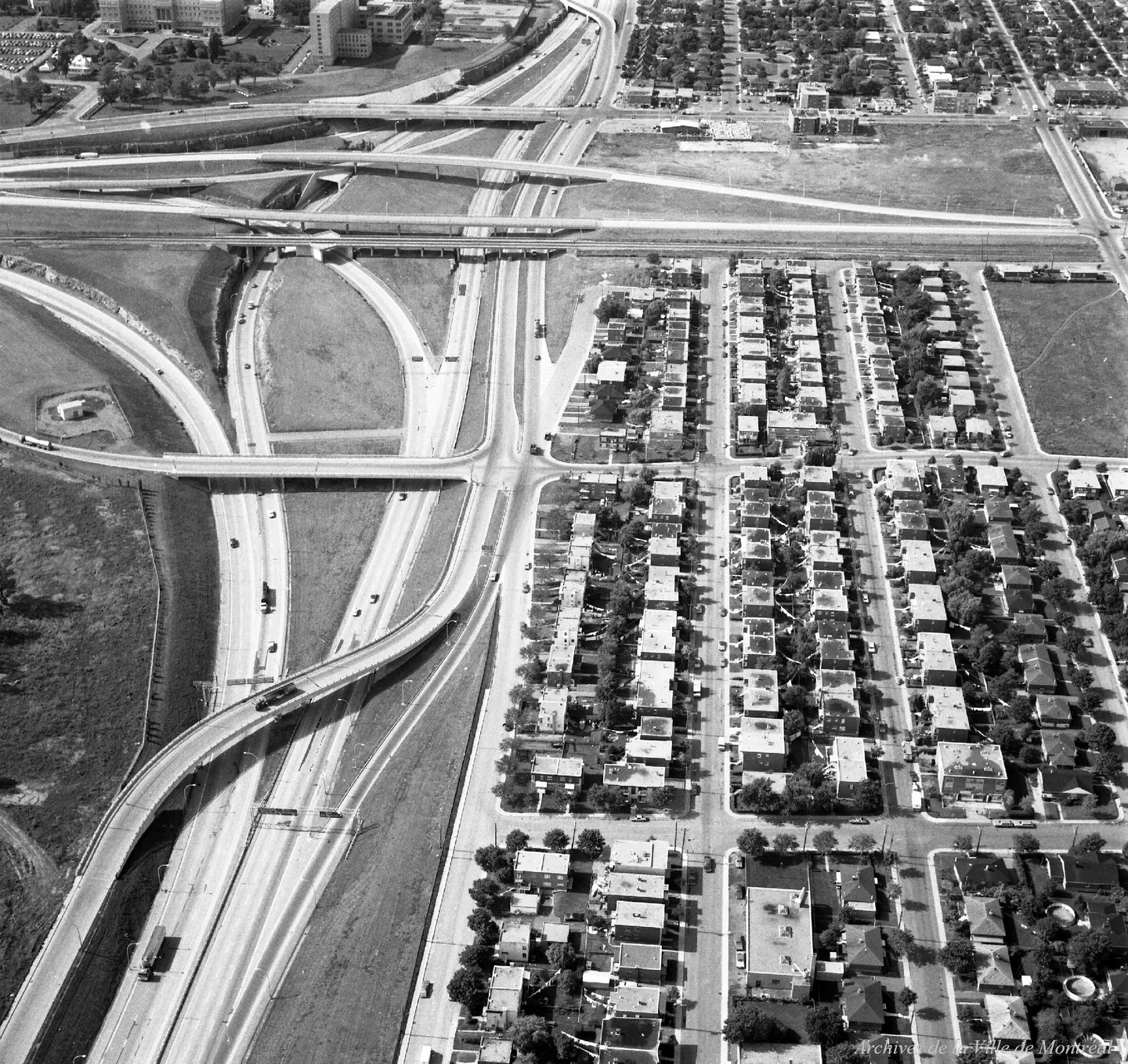
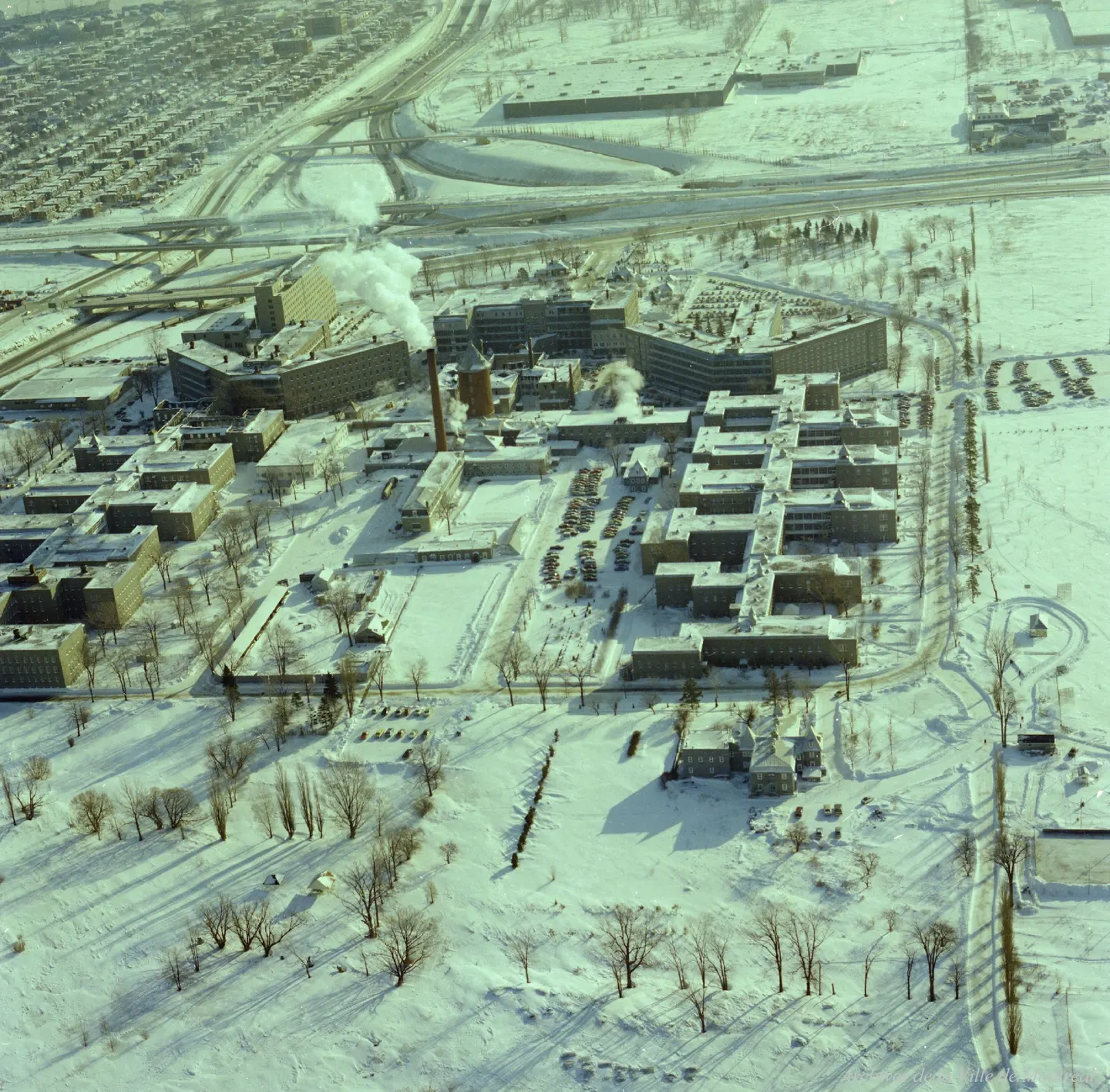
VM94-B097-003 · VM94-B215
Shelter in red pavilions
In 1889, Sister Thérèse travelled again, visiting institutions in Europe with physicians and another member of her community. The observations gathered on that journey soon acquired an immediate purpose. After the fire, she used a design seen abroad to plan temporary accommodation. Notes from a study trip became practical material for rebuilding while patients needed somewhere to stay.
Metal sheets painted red covered the temporary buildings, giving them the name red pavilions. The first patients returned on 18 August 1890. These structures provided accommodation while a permanent hospital was prepared. The rebuilt institution opened in 1901 with twelve large stone pavilions. Between the original asylum and the stone complex stood this temporary hospital, designed in response to a disaster rather than as the final form of the site.
Care within the walls
Changes in the buildings were only one part of the hospital’s history. Physician Edmond-Joseph Bourque removed metal restraints but replaced them with a straitjacket. The change belonged to the medical practices of that period. The institution also had two groups of doctors, those appointed by the government and those employed by the sisters. Disagreements over their responsibilities formed part of its operation alongside the work of caring for patients.
Training became an established activity. A nursing course for the hospital’s religious sisters opened in 1912, and a formal affiliation with Université de Montréal followed in 1973. The campus seen in the aerial photographs was therefore a place of accommodation, treatment and education. Its buildings show the extent of the institution, while leaving the day-to-day experiences of individual patients and nurses beyond the reach of an aerial view.
Finding the institution today
The old name survived in common use, but the hospital became Louis-Hippolyte-Lafontaine, with the change confirmed in letters patent dated 8 January 1976. In 2013 it became the Institut universitaire en santé mentale de Montréal. The names mark successive chapters of the same institution. Its more recent history includes adopting a full-citizenship approach in 2011 and administrative integration into the CIUSSS in 2015.
The hospital site remains at 7401 Rue Hochelaga, in Mercier-Ouest. From the surrounding streets, the scale of the pavilion complex is still apparent. Aerial photographs taken in 1972, 1976 and 1977 offer different dated views under the institution’s former name. On the ground, the name IUSMM now connects those buildings to the mental health services provided there. The site continues to function as a hospital rather than as a set of empty historic structures.