
At Parc Rutherford, the McTavish reservoir lies beneath the green space. The pumping station stands beside that hidden store of water on Mount Royal’s slope, linking a public park to an operating part of the city’s water supply.
Using the height of the mountain
An open-air reservoir was built south of Avenue des Pins between 1854 and 1856 as Montreal developed its aqueduct. Engineer Thomas C. Keefer was responsible for the reservoir. Its position on the mountain served a practical purpose: height allowed gravity to help redistribute water through the network. The slope was therefore doing municipal work as well as shaping the view above the city.
The first McTavish pumping station followed in 1875. Reservoir and pumps performed related but different jobs, storing water and moving it through the system. As Montreal’s needs grew, the city modernized its distribution infrastructure. Municipalization in the 1920s brought existing networks together and helped set the context for replacing the old pumping station. McTavish formed part of a larger reorganization of how water reached the city.
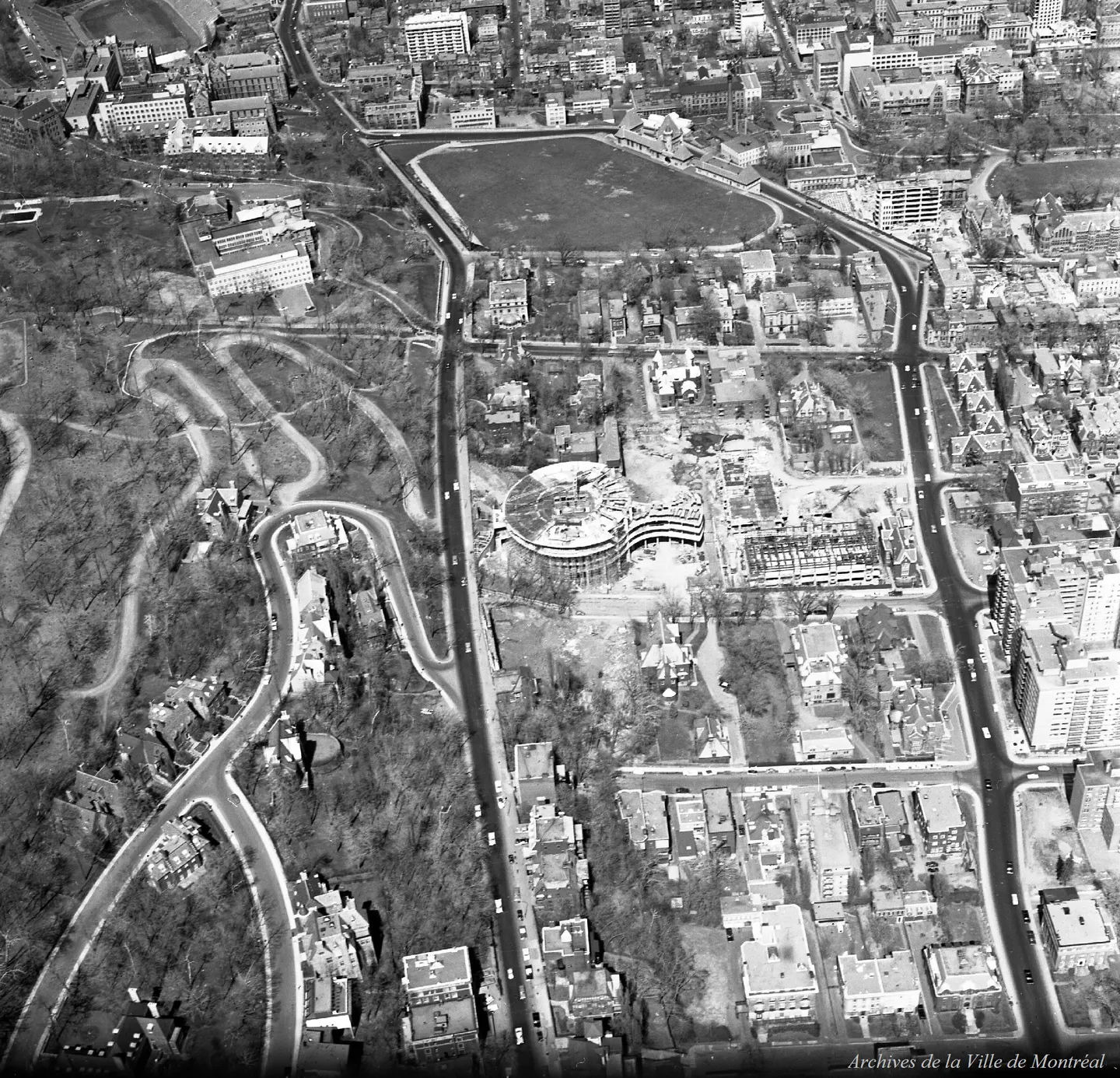
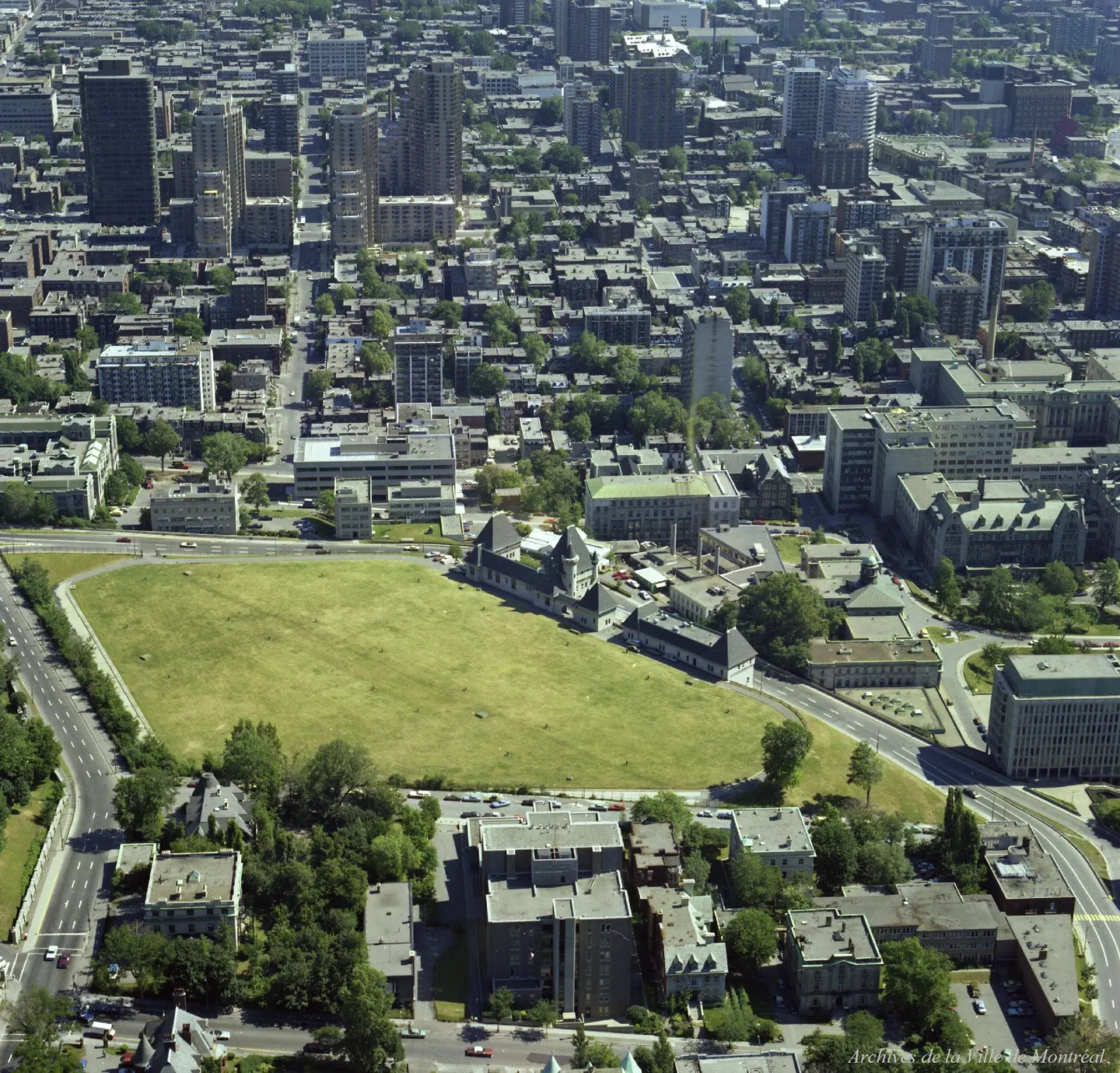
VM94-B012-025 · VM94-B246
Stone walls around modern machinery
The present station was constructed between 1928 and 1932 under chief engineer Charles-Jules Des Baillets, to plans by architect Jean-Omer Marchand. Reinforced concrete and steel formed its structure behind the stone exterior. Modern construction supported a building whose outward design borrowed from much older architecture. Its purpose remained the practical task of pumping water, rather than the residential or ceremonial functions its appearance might suggest.
Towers, turrets and steep roofs gave it the character of a French Renaissance château. Stone window details and ornament completed the composition, which also related to nearby institutions such as the Royal Victoria Hospital. Later work altered its form. A west wing was added in the late 1940s, and the central part expanded in the late 1960s. The building seen from the street combines the original station with these subsequent additions.
The reservoir disappears from view
During the 1940s, McTavish’s reservoir was covered. Across the mountain, covering open reservoirs addressed hygiene and safety concerns. Parc Rutherford was laid out above the underground water store, allowing the surface to acquire another public use. The water disappeared from sight without disappearing from the site’s function. An essential part of the infrastructure remained beneath land that people could use outdoors.
That arrangement also created open views towards the station from the north. Park and machinery share the block at different levels, with green space above the operating reservoir. Sports facilities later prompted discussion about the use of this public landscape. Beneath the playing surfaces and lawns, McTavish continued to serve the water system alongside other covered reservoirs on Mount Royal. The apparently open ground belongs to both recreation and infrastructure.
A working station today
The current upgrade concerns an active pumping station. The municipal programme includes replacement pumps and water pipes, renewed electrical installations and improved earthquake resistance. Its stated aims combine continuity of water service with conservation of the building’s heritage character. The city’s published schedule runs from summer 2025 to the end of 2033, within a project that began in 2020.
The station stands at 815–855 Avenue du Docteur-Penfield in Peter McGill. From the street, its stone volumes sit against the mountain, while the park occupies the surface above the neighbouring reservoir. The visible building and the underground water store explain one another: an elaborate civic exterior, a public outdoor space and a supply of water that continues to work for Montreal.